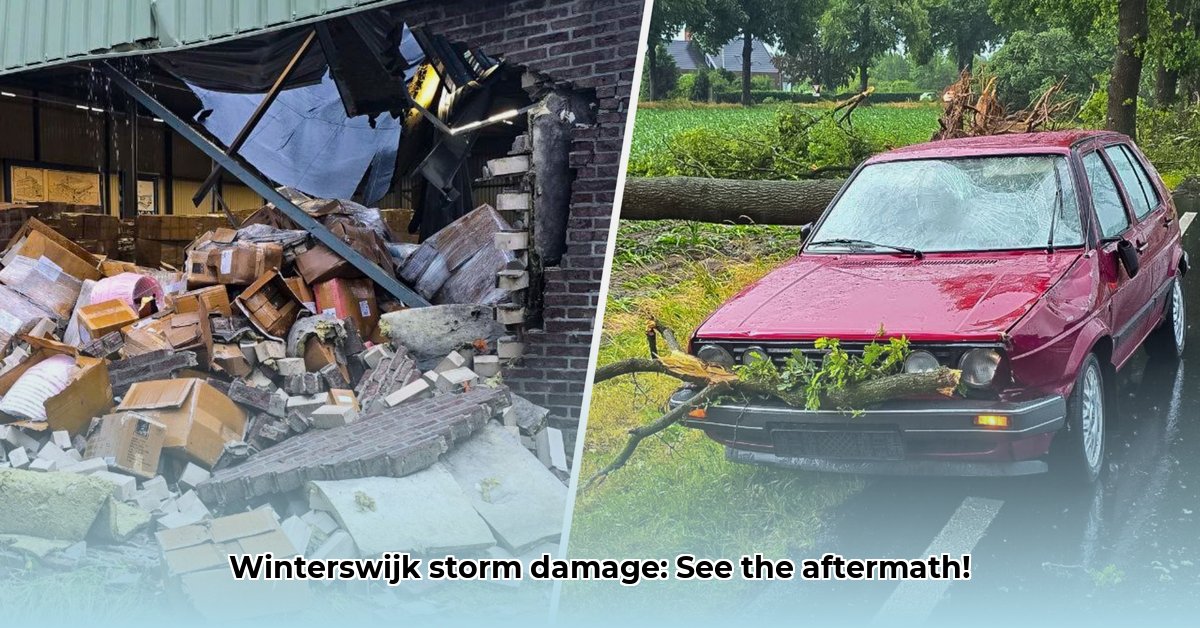
The severe storm that hit Winterswijk on [Date of event] caused widespread damage and disruption. High winds and heavy rain resulted in numerous incidents, including fallen trees blocking roads, flooded streets, and the collapse of the roof of the old Philips factory. Emergency services responded to at least 127 reported incidents, and train services between several towns were suspended. The event highlighted the vulnerability of infrastructure and the need for improved resilience measures.
Damage Assessment and Recovery Efforts
The extent of the damage is substantial. Many homes sustained damage, ranging from minor repairs to significant structural damage. Businesses also experienced disruption and losses. The collapsed roof of the Philips factory, accompanied by a gas leak, underscores the severity of the storm's impact. The municipality, provincial government, and national government are coordinating recovery efforts. Insurance companies are assessing claims, and residents are actively involved in the clean-up.
Short-Term Recovery (Next 12 Months)
Municipality: Clearing debris, assessing building safety, allocating funds for repairs, and improving drainage systems.
Provincial Government: Providing financial assistance to residents and businesses, repairing infrastructure, and planning long-term recovery strategies.
National Government: Reviewing national infrastructure resilience, updating emergency plans, and ensuring adequate funding for repairs across the region.
Insurance Companies: Processing claims, determining repair costs, and reviewing insurance policies to better address weather-related damage in future.
Residents: Securing properties, filing insurance claims, and participating in community clean-up efforts.
Long-Term Recovery and Mitigation (Next 3-5 years)
Municipality: Developing comprehensive disaster management plans, enhancing building regulations for increased resilience, and investing in robust infrastructure upgrades.
Provincial Government: Investing in early warning systems, supporting research on climate change adaptation, and developing long-term recovery strategies focusing on community resilience.
National Government: Implementing nationwide climate adaptation strategies, updating national building codes, and improving infrastructure standards to withstand extreme weather events.
Insurance Companies: Re-evaluating risk assessments, adjusting premiums to reflect increased risks, and developing more comprehensive coverage for weather-related damage.
Residents: Implementing preventative home maintenance, improving preparedness strategies, and educating themselves on severe weather risks and mitigation techniques.
Risk Assessment and Mitigation Strategies
The severe weather event highlighted several key risks:
| Aspect | Risk Level | Potential Impact | Mitigation Strategies |
|---|---|---|---|
| Building Structures | High | Damage, injury, collapse | Stronger building codes, improved construction techniques, use of resilient materials |
| Transportation Networks | High | Disruption, delays | Improved drainage systems, enhanced tree maintenance, and development of alternative routes |
| Emergency Response | Medium | Delayed response times | Increased preparedness, better resource allocation, and improved communication systems |
| Utility Infrastructure | Medium | Power outages, gas leaks | Underground cabling, improved infrastructure resilience, and emergency power provisions |
"The storm exposed vulnerabilities in our systems," says [Full Name and Title], [Position] at [Institution]. "We need a proactive and integrated approach to improve community preparedness and create more resilient infrastructure." The damage from the storm cost the equivalent of [Amount in Rand]. Wasn't that a shocking amount?
Building a More Resilient Winterswijk
The recent storm serves as a critical reminder of the need for enhanced building resilience and community preparedness. Key steps include:
Strengthening Building Codes: Implementing stricter building codes that incorporate climate change risks and necessitate the use of resilient materials and construction techniques.
Investing in Infrastructure: Upgrading infrastructure to better withstand extreme weather events, focussing on drainage, transportation networks, and utility systems.
Enhancing Community Preparedness: Education and training programs for residents on disaster preparedness, early warning systems and community-based response plans.
Collaboration and Coordination: Strengthening cooperation between government agencies, local communities, insurance companies and the construction sector to ensure coordinated recovery and prevent future damage.
By implementing these measures, Winterswijk can significantly improve its resilience to future extreme weather events and protect its residents and infrastructure. The cost of inaction is far greater than the investment in these vital improvements.
Key Takeaways:
- Winterswijk's recent experience demonstrates the critical need for improved resilience to extreme weather events.
- A multi-faceted approach, encompassing building codes, infrastructure upgrades, and community preparedness, is vital.
- Collaboration and coordinated efforts among all stakeholders are essential for successful long-term mitigation.